


From the Venetian Aristocracy to the Descendants of the DUPRE Plantations
Gradenigo Island, St. Landry Parish, Louisiana
Historical Research and Personal Reflections by Alex D. LEE
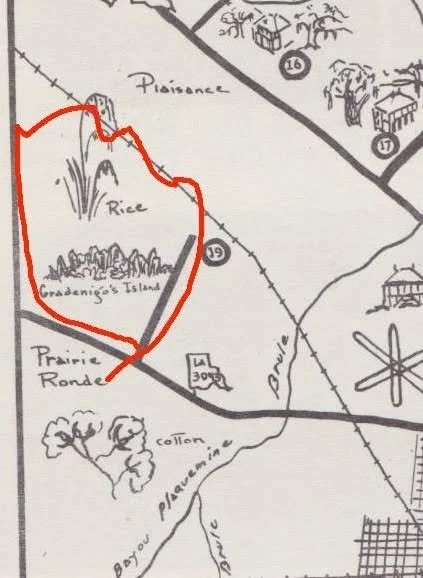
Gradenigo Island
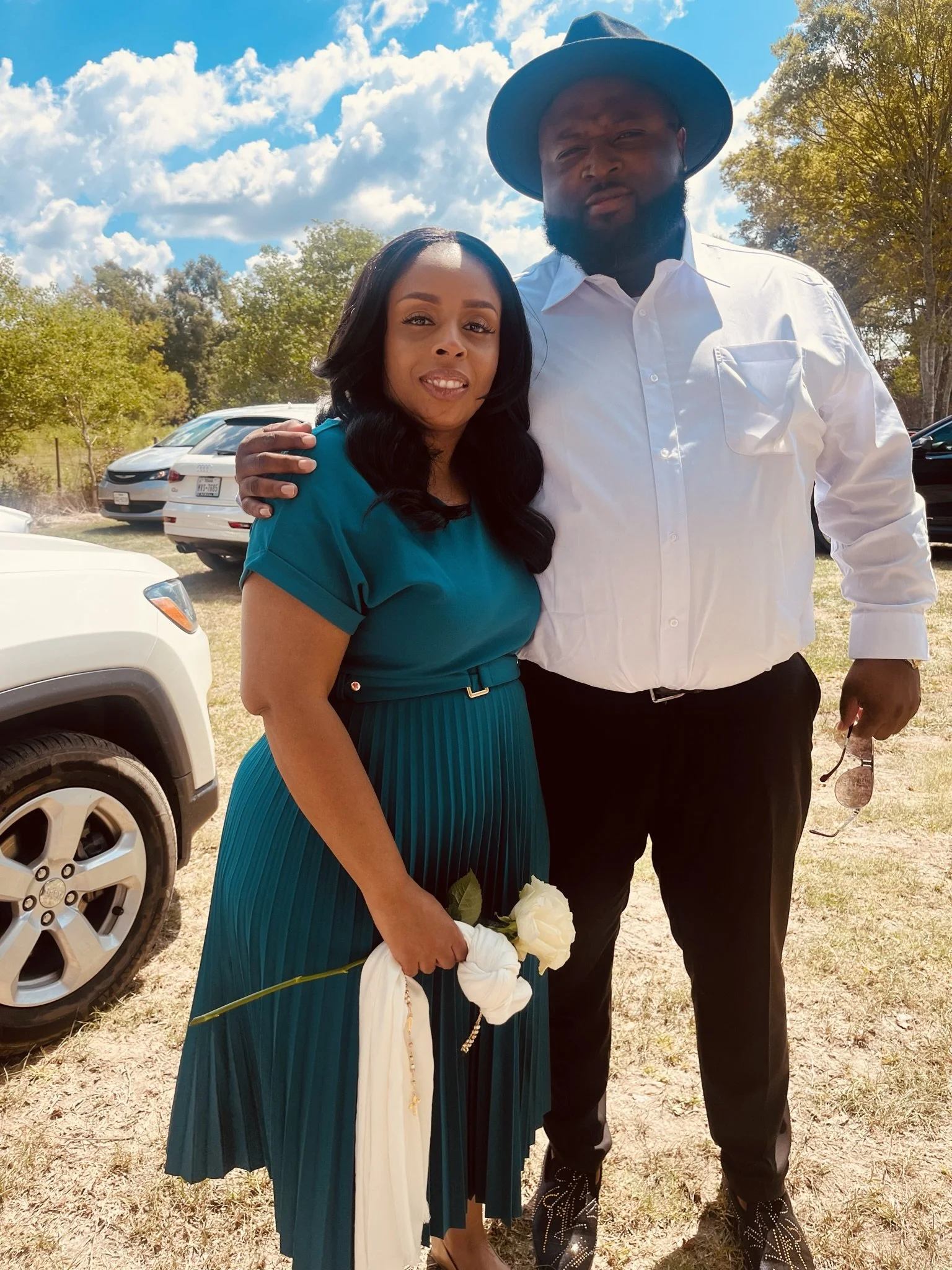
Cousin Sherry THOMAS & I
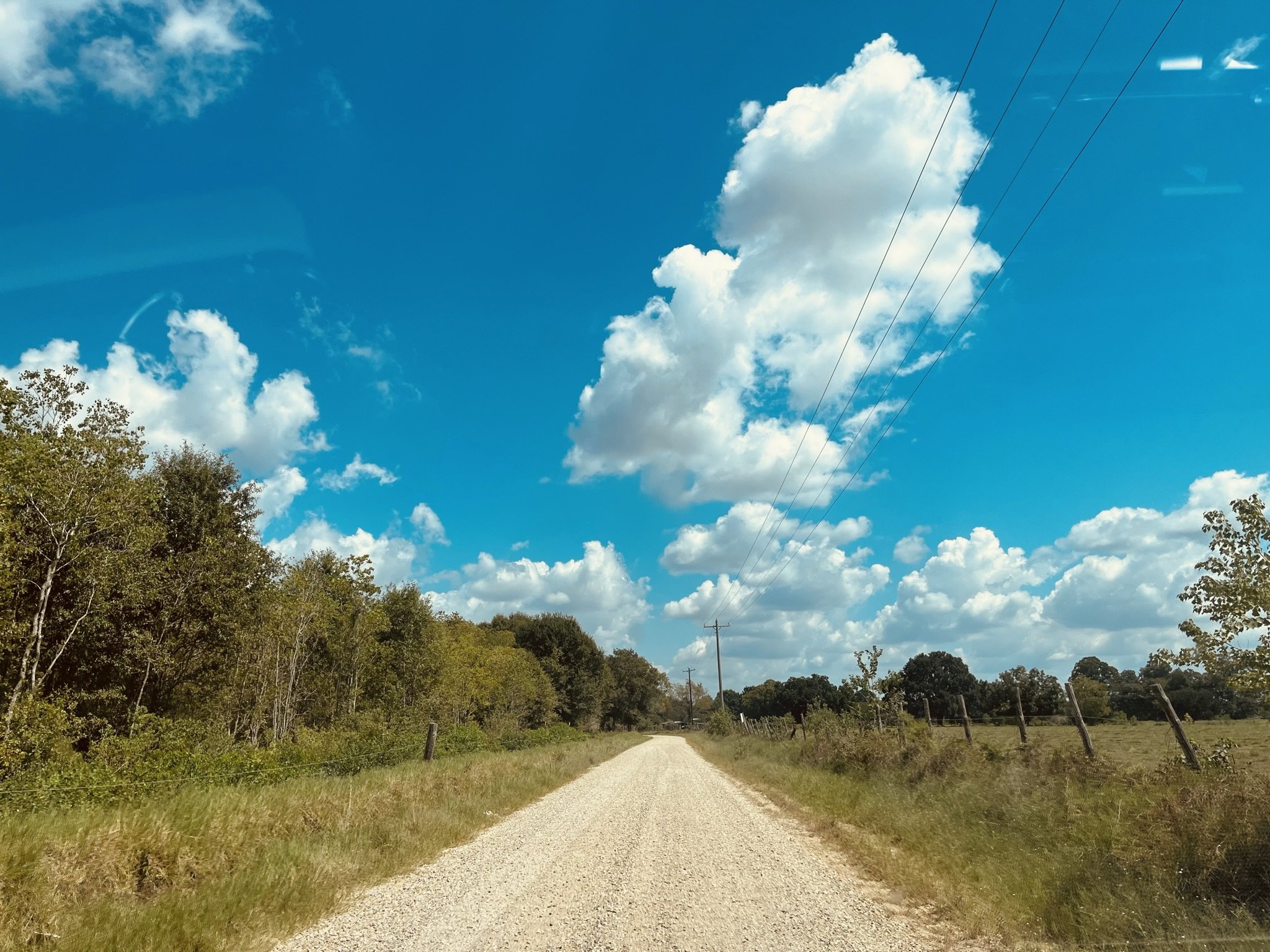
Sept 2023, Gradenigo Island, Louisiana
My Introduction to Gradenigo Island
My interest in the history of Gradenigo Island began through conversations with relatives while collecting oral histories and documenting my family's ancestry throughout southwest Louisiana. During these interviews, I frequently heard references to a place known simply as "The Island," a community that held considerable significance among several of my grandfather's close and dear relatives. Although I had spent years researching families throughout St. Landry Parish, I knew very little about this particular community beyond the information that had been passed down through generations.
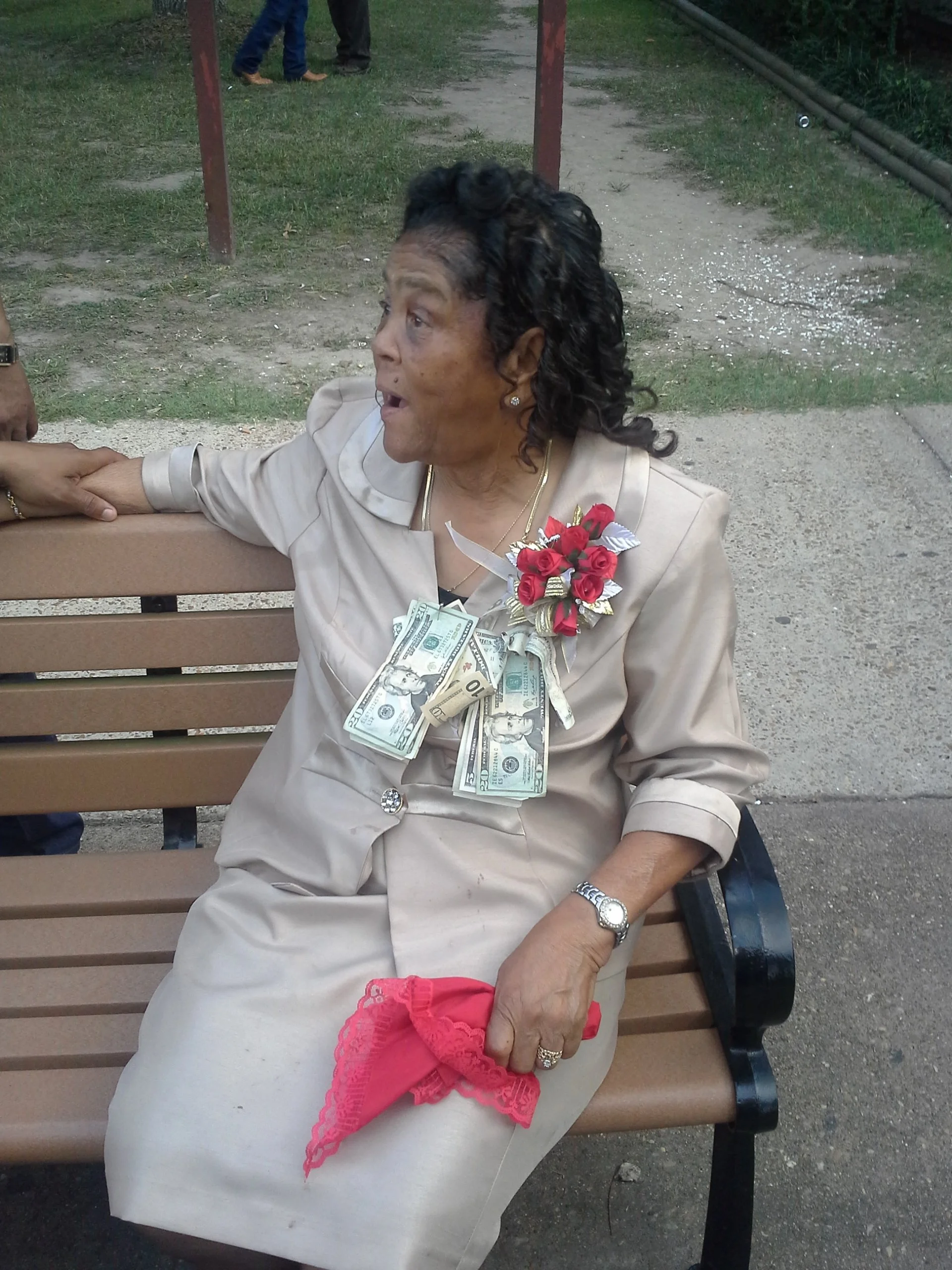
Cousin Hilda THIERRY-HANCHETT at her 80th in Opelousas, Louisiana
One relative in particular was Hilda THIERRY HANCHETT, who often spoke about her mother's family coming from The Island. Her mother, Odelia FRANK, was connected to this community, and it was through conversations such as these that I first became interested in learning more about its history. What fascinated me was how naturally my older relatives referred to The Island, almost as though everyone was expected to know exactly where it was located. For them, this was not simply a geographical reference but a place associated with family, childhood memories, ancestral burial grounds, and generations of relatives who had once lived there.
Initially, I assumed they were referring to an actual island surrounded by water. However, I later learned that the name referred to a rural community located in Prairie Ronde, northwest of Opelousas, Louisiana. The surrounding bayous and waterways contributed to the area's identification as an island, although it was not an island in the traditional geographical sense. Historically, the community was known as Gradenigo Island, later commonly called Gradney's Island, a name associated with one of the prominent landowning families of the old Opelousas district.
At the time, I did not realize that these conversations would eventually lead me to investigate a community whose history extended back to colonial Louisiana and whose residents included descendants of enslaved people, free people of color, and some of the earliest European families to settle in the Opelousas district. My curiosity initially centered on understanding the family connections mentioned by my relatives, but as I began examining historical documentation, I recognized that the community had a much larger history that deserved to be preserved.
The GRADENIGO Family and Colonial Opelousas
The origins of Gradenigo Island are closely associated with Jean GRADENIGO, also identified in historical records as Don Juan de GRADENIGO, whose family was connected to the Venetian aristocracy of Italy. According to historical accounts, Jean traveled extensively throughout Europe and the Americas before arriving in Mobile, where he met and married Marguerite KREPS, the daughter of a wealthy merchant of German ancestry. The couple eventually settled in the Opelousas district, where they acquired a substantial tract of land described as measuring approximately three miles from east to west and one and a half miles from north to south. This property, situated within the Prairie Ronde region, became known as Gradenigo Island.
Jean GRADENIGO was a prominent member of colonial Opelousas, serving as a record keeper associated with the old Opelousas Commandant and holding a position of responsibility within the Catholic Church. His standing within the community is supported by an early baptismal record identifying him as a churchwarden or trustee of the Opelousas post. The same record contains an account written by a Catholic priest who personally knew Jean and documented the family's connections to the Venetian nobility.
A historical account also mentions Antonio GRADENIGO, one of Jean's sons, who was reportedly sent to Europe to receive an education. In 1798, Antonio allegedly abandoned his studies to join Napoleon's military campaign in Egypt and was never heard from again. Although additional documentation would be needed to reconstruct Antonio's life, the account illustrates the continuing European connections attributed to the family during the closing years of the eighteenth century.
The family's position in Opelousas was further strengthened through marriages and relationships with other prominent households involved in military service, landownership, and church administration. These connections are important because they demonstrate how early European settlers became part of the social and political structure of the Opelousas district, while later generations of their descendants developed family relationships that extended across racial and legal classifications.
The Catholic Baptismal Record of Brigitte GRADENIGO
One of the earliest documents identifying Jean GRADENIGO and his family in Opelousas is the baptismal entry of his daughter Brigitte GRADENIGO, who was born on March 8, 1787, and baptized on January 17, 1789. The record identifies her parents as Jean GRADENIGO and Marguerite KREPS and describes Jean as "majordomo de fabrica de este Puesto," meaning churchwarden or trustee of the local post.
The sponsors were Nicolas ROUSSEAU, described as "oficial de Cavalleria," an officer of cavalry, and "su Yerno," his son-in-law, along with Marie GRADENIGO. The entry includes the signatures of GRADENIGO and N. ROUSSEAU.
The published transcription reads:
GRADENIGO, Brigitte (Jean - "majordomo de fabrica de este Puesto" [churchwarden or trustee of this Post] & Marguerite KREPS, his wife) b. 8 March 1787, bt. 17 Jan. 1789 Spons: Nicolas ROUSSEAU - "oficial de Cavalleria" [troop or cavalry commander], "su Yerno" [his son-in-law] & Marie GRADENIGO. Signed: GRADENIGO, N. ROUSSEAU.
What makes this entry particularly significant is a marginal annotation attributed to Father Michel Bernard BARRIERE, who served the Catholic community of Opelousas and personally knew Jean GRADENIGO. In this notation, the priest discussed the family's Venetian origins and described correspondence between Jean and individuals in Europe.
Original French Marginal Annotation
‘Tous ceux compris dans ce livre sous le nom de GRADENIGO sont de la meme fammille. C'est a dire de la fammille du Senat de Venise; Ce Don De GRADENIGO est frere, entre autres, tant ambassadeurs que Senateurs, de Don --- GRADENIGO Chanoine de St. Marc a Venise mort il y a environ 7 a 8 ans cecy sont des faits hors de doute ayant ete interpose d'icy a Bordeaux par mon frere qui correspondait a Venise et m'adressait les lettres que je faisais posser a deffunt Don Jean De GRADENIGO. En 1356 un Jean GRADENIGO etait”
Michel Bernard BARRIERE, Pretre desservant.
English Translation Accompanying the Published Entry
All those included in this book (Register of Baptisms) under the name GRADENIGO are from the same family, that is to say, the family of the Senate of Venice; This Sir Don De GRADENIGO, is a brother, among others, are ambassadors as well as Senators, of Sir --- GRADENIGO, Canon of St. Mark in Venice - died about 7 or 8 years ago. These are facts without any doubt, having been received from my brother in Bordeaux who corresponded with someone in Venice and sent letters which I in turn gave to the deceased Jean DE GRADENIGO. In 1356 a Jean GRADENIGO was Dogue of Venice. See "Ecclisiastical History" by Fleury in [vol.] 12, page 154.
Michel Bernard BARRIERE, officiating (or substituting for the pastor).
Fr. Joseph de ARAZENA
Source: Opelousas Catholic Church, Volume 1-A, page 90.
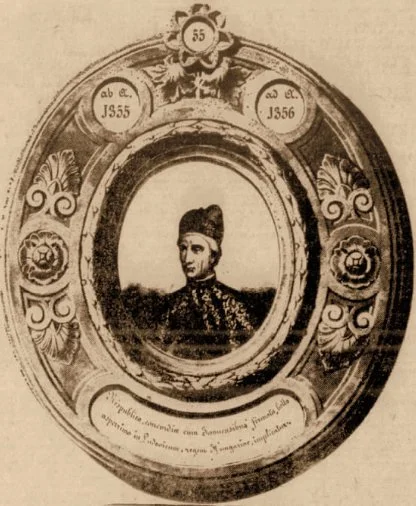
Giovanni Gradenigo of Venice
The significance of this record extends beyond identifying Jean GRADENIGO's position within the Catholic Church. Father BARRIERE explained that his brother, who maintained correspondence with individuals in Venice through Bordeaux, forwarded letters that he personally delivered to Jean in Opelousas. He considered this correspondence evidence of the family's connections to Venetian ambassadors, senators, and a Canon of St. Mark. The priest also referenced a Jean GRADENIGO who served as Doge of Venice during the fourteenth century, although establishing the exact genealogical relationship between that individual and the Louisiana family would require additional documentation.
According to another historical account attributed to Father BARRIERE, Jean GRADENIGO died in Opelousas and was buried on March 1, 1809. Since the marginal annotation refers to Jean as deceased, it was evidently written after his death and should be distinguished from the original baptismal entry of January 17, 1789.
This document provides an important historical connection between the community's name and the Venetian origins attributed to the GRADENIGO family. However, the history of Gradenigo Island extends well beyond the European ancestry of the family whose name it bears.
The GRADENIGO Family and the Free People of Color of Opelousas
The GRADENIGO family established relationships throughout the Opelousas district, and its descendants included both white families of European ancestry and families of varying degrees of African and European descent. Among Jean GRADENIGO's descendants was Joseph Bonaparte GRADENIGO, whose relationship with Adelaide LEMELLE, a free woman of color, produced children who became associated with the established gens de couleur libres community of Opelousas.
One of the most significant records I identified concerning this family is an act of emancipation dated December 21, 1833, in which the heirs of Joseph Bonaparte GRADENIGO and Adelaide LEMELLE jointly participated in the emancipation of four enslaved individuals. Those individuals were MARIE, a woman approximately 43 years old; her son JEAN BAPTISTE, approximately seven years old; MARTIN, a carpenter approximately 37 years old; and HONORE, approximately 35 years old.
Through additional courthouse documentation and Catholic Church records, I was able to identify these individuals as relatives of Joseph Bonaparte GRADENIGO. MARIE was identified as his daughter, while MARTIN and HONORE were also identified as his sons. MARIE's son, JEAN BAPTISTE, was later identified as Jean Baptiste DEFILS, whose father was a French shoemaker from Bearn, France. What makes the emancipation particularly important is that the white heirs of the GRADENIGO family and the free people of color descended from Adelaide LEMELLE participated in the same legal transaction, demonstrating recognition of family relationships across racial and legal classifications.
Source: St. Landry Parish Courthouse, Book H-1, pages 303–304, December 21, 1833.
Additional records document how these descendants became connected to other established families in the region. On October 31, 1857, HONORE GRADENIGO, a free man of color, married Marie CHEVIS, a free woman of color, according to Opelousas Courthouse Marriage No. 1656. Other descendants established connections through marriage with the DONATO, LEMELLE, and THIERRY families, while the GRADENIGO surname also appeared as GRADNEY among descendants of color.
These records demonstrate the complexity of the family whose name became associated with the community. Nevertheless, identifying the ancestry of the GRADENIGO family is only one part of reconstructing and piecing together the history of The Island, especially when the surrounding land and its residents are examined alongside the extensive plantation holdings of another prominent family of St. Landry Parish, the DUPRE family.
Governor Jacques DUPRE and the Wealth of the DUPRE Family
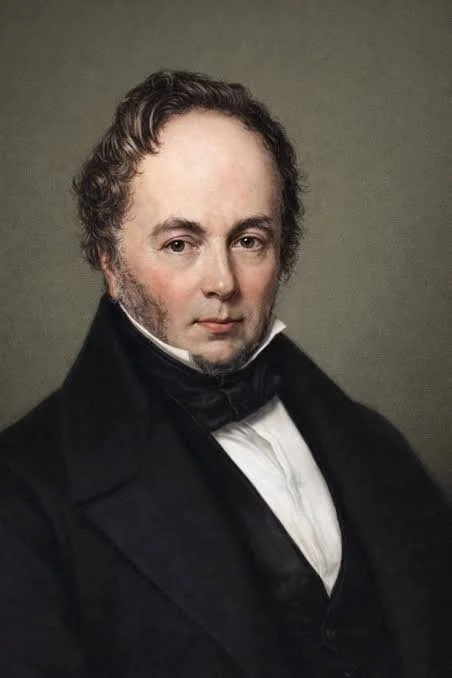
Governor Jacques DUPRE
One of the most significant discoveries I made while investigating Gradenigo Island was the extent to which the community was connected to the DUPRE family, particularly through descendants of Governor Jacques DUPRE and the families whose ancestors had been enslaved on DUPRE properties. What makes this connection especially important is that the history involves both descendants of the DUPRE family itself and descendants of the people they enslaved. In some cases, these histories intersected through biological ancestry, marriage, property ownership, and relationships that continued long after emancipation.
Jacques DUPRE was born on February 12, 1773, in New Orleans, the son of Laurent DUPRE de Terrebonne and Marie Josephine FONTENOT. Following his father's death in 1783, his mother married Louis FONTENOT, commonly known as Grand Louis, who was recognized as one of the largest cattle ranchers in the Opelousas district. Growing up within this environment, Jacques became associated with the cattle industry and the extensive landholdings that characterized the wealth of several prominent families in colonial Opelousas.
In 1791, Jacques received a Spanish land grant consisting of forty arpents of frontage along Bayou Boeuf, a substantial acquisition that helped establish his agricultural operations. The following year, on May 19, 1792, he married Theotiste ROY of Pointe Coupee, and together they raised seven children. Jacques eventually became a wealthy cattle rancher and plantation owner whose holdings extended across portions of the Opelousas district. By the 1820s, he was reputed to be the largest cattle rancher in Louisiana, a distinction that provides some indication of his considerable financial standing and influence within the region.
The DUPRE family's wealth was not limited to livestock. Its holdings included agricultural properties, enslaved people, and other valuable assets, with Jacques also acquiring properties in New Orleans during the 1830s. His former residence near Opelousas was eventually documented by the Historic American Buildings Survey, providing an architectural record of a family whose wealth and influence continued to be recognized long after his death.
When examining this wealth from a genealogical perspective, however, I believe it is important to recognize the role enslaved labor played in the accumulation and preservation of plantation fortunes. My research into the DUPRE holdings has identified an enslaved population numbering more than two hundred individuals, including men, women, and children whose names appeared in plantation inventories and other courthouse documents. These records provide an opportunity to examine the human lives behind the wealth that supported the family's social and political position.
Jacques DUPRE also became an influential figure in Louisiana politics. During the War of 1812, he served as a major in the 16th Regiment of the Louisiana Militia and participated in the Battle of New Orleans. He later served in the Louisiana House of Representatives before being elected to the Louisiana Senate in 1828.
Following the death of Governor Pierre DERBIGNY in 1829, Louisiana experienced a period of political uncertainty concerning succession to the governorship. Armand BEAUVAIS initially assumed the responsibilities of governor but later resigned, resulting in Jacques DUPRE, who had become President of the Louisiana Senate, assuming the office of acting governor on January 14, 1830.
Jacques served as acting governor until January 31, 1831. During his administration, Louisiana continued pursuing improvements to transportation and commercial infrastructure, including the incorporation of railroad and canal companies, projects involving navigation, and commercial enterprises associated with the state's expanding economy. His administration also occurred during a period when Louisiana enacted increasingly restrictive legislation concerning enslaved people, reflecting the legal system that protected slavery and the economic interests of its owners.
Following his tenure as governor, Jacques continued serving in the Louisiana Senate until his death on September 14, 1846. He was buried at St. Landry Catholic Church in Opelousas. Although his political career provides an important measure of the family's influence, it is his extensive landholdings, succession records, and the families associated with his properties that have become especially significant to my genealogical research.
Jacques DUPRE and the Last Wishes of Augustin Belair FONTENOT
Although Jacques DUPRE is remembered in Louisiana history for his political career and service as governor, one of the most remarkable aspects of his life that I encountered through my research concerns his involvement in carrying out the last wishes of his uncle, Augustin Belair FONTENOT.
Through courthouse documentation, I discovered that Augustin Belair FONTENOT had children of color who were liberated and became associated with substantial landholdings near present-day Mamou, Louisiana. These holdings represented considerable wealth, particularly when considering the legal and social circumstances experienced by free people of color in Louisiana during the early nineteenth century.
What makes this history especially important is that Jacques DUPRE was involved in carrying out his late uncle's wishes concerning these children and their inheritance. While Jacques belonged to Louisiana's wealthy white landowning class, he also participated in legal matters involving relatives of color whose freedom and property rights had been recognized through family arrangements and documented transactions.
The significance of this case extends beyond the liberation of individuals from slavery. It involves the recognition of children of color, the transfer of valuable real estate, and the establishment of substantial property holdings among descendants who occupied a different legal and social position from their white relatives. The FONTENOT succession provides an opportunity to examine how wealth and property moved between generations and how some families of color acquired valuable estates before the abolition of slavery.
For me, this case demonstrates why genealogical research must go beyond the familiar accomplishments of historical figures. A governor may be remembered for holding political office, participating in military campaigns, or contributing to the development of Louisiana's economy, but succession records can reveal family relationships and legal responsibilities that provide an entirely different perspective on that person's life. Although the FONTENOT properties near Mamou were separate from Gradenigo Island, the circumstances surrounding their ownership provide valuable historical context for understanding inheritance, emancipation, and property ownership among free people of color in the broader Opelousas district.
The DUPRE Family, Their Formerly Enslaved, and the Development of Gradenigo Island
I began to dig more into the history of GRADENIGO Island after discovering the succession of Evariste FRANCOIS. Evariste FRANCOIS, a mulatto man born around 1822 in Louisiana. According to is probate , he died on January 17, 1903, at his residence on Gradenigo Island, commonly known as Gradney Island, in St. Landry Parish. According to the 1880 United States Census, his father was born in Africa and his mother was born in Kentucky.
On February 5, 1903, his surviving widow, Sarah Jane McPHERSON, petitioned the District Court of St. Landry Parish concerning his succession.
Evariste was married twice. His first wife was Elizabeth CARRIERE, whom he married in January 1877. She died approximately two or three years later without children. On March 4, 1882, he married Sarah Jane McPHERSON. The marriage record identifies McPHERSON as the widow of PIERCE, whom genealogical research identifies as Nathaniel PIERCE. Neither marriage produced children.
On March 31, 1892, Evariste executed a nuncupative will by public act before Laurent DUPRE, notary public. He designated his surviving wife as universal legatee and testamentary executrix. His estate included land acquired before his marriages and community property acquired during his second marriage, along with movable property valued at less than $100.
Because Evariste died without descendants or surviving ascendants, his succession identified ten presumptive heirs, representing several branches of his extended family.
Alcee PITRE, Joseph PITRE, Leonce PITRE, and Mary PITRE, wife of Richard MORRIS who I identified as the children of Etienne PITRE as well as Isaac ESPRIT, Manuel ESPRIT, Milo ESPRIT, and Lucy ESPRIT, wife of Pierre PITRE.
The GRIFFIN family: Valmont GRIFFIN and Auguste GRIFFIN.
The identification of these individuals is particularly significant because it establishes that the PITRE, ESPRIT, and GRIFFIN families were considered part of Evariste FRANCOIS's extended family, although the succession does not specify their exact degrees of relationship.
Additional genealogical research established that Valmont GRIFFIN was the son of Thomas GRIFFIN and Mary ESPRIT, as documented on his death certificate. It is suspected that Auguste GRIFFIN shared the same parents, although that relationship requires additional verification.
Connection to the Formerly Enslaved ESPRIT Family
One of the most significant discoveries resulting from this succession concerns the identification of formerly enslaved individuals associated with Governor Jacques DUPRE's estate and the family of Edmond DUPRE.
An earlier plantation record documents the sale of three enslaved individuals to Edmond DUPRE for $1,400:
EUGENE, described as a nègre, age 25, with an approximate birth year of 1823.
ELIZA, age 16, with an approximate birth year of 1832.
LUCY, identified as ELIZA's child.
Based on comparisons with other historical records, I believe EUGENE was Eugene ESPRIT and that the child LUCY was Lucy ESPRIT, who later married Pierre PITRE.
This identification is particularly important because Lucy ESPRIT appears among the presumptive heirs of Evariste FRANCOIS in 1903. Her family was associated with Gradenigo Island, where members of Edmond DUPRE's family later resided.
The relationship between these records provides an important lead for tracing the ESPRIT family across different plantations and property holdings. It also raises the possibility that members of Evariste FRANCOIS's extended family were among the enslaved individuals whose names appeared in earlier estate inventories.
Although the identification of EUGENE as Eugene ESPRIT and LUCY as Lucy ESPRIT remains a genealogical conclusion requiring corroborating records, the combination of the succession, plantation documentation, and subsequent family records provides a basis for further investigation.
Historical and Genealogical Significance
The 1903 succession of Evariste FRANCOIS is especially valuable because it identifies members of several interconnected families who were living decades after emancipation. The appearance of the ESPRIT surname among his presumptive heirs provided an opportunity to compare this family network with individuals documented in earlier plantation records.
The discovery also demonstrates how an estate succession involving a landowning man of color can preserve information about extended relatives whose earlier histories may be documented through enslavement records.
Although I originally purchased the succession to learn more about Evariste FRANCOIS and his connection to Gradenigo Island, the document ultimately provided information extending beyond the FRANCOIS family. By identifying his presumptive heirs and comparing their names with previously collected records, I was able to investigate additional branches of the ESPRIT, PITRE, and GRIFFIN families and their potential connections to formerly enslaved individuals associated with the DUPRE plantations.
The significance of this discovery is that a succession filed in 1903 provided names that could be compared with records created before emancipation, helping establish the documentary foundation for identifying formerly enslaved individuals and tracing their descendants across generations.
As I began examining the history of families associated with Gradenigo Island, I discovered that many were connected to the extensive DUPRE plantation holdings of Prairie Ronde and Bayou Boeuf. These connections were particularly significant because they involved descendants of the DUPRE family as well as descendants of individuals whose ancestors had once been enslaved by members of that same family.
Their histories were shaped by generations of enslavement, biological relationships, marriage, inheritance, and property ownership, with some of these connections continuing long after the abolition of slavery. In certain cases, descendants of enslavers and the formerly enslaved shared biological ancestry, while in others their historical relationships were established through plantation ownership and later land transactions.
Governor Jacques DUPRE's extensive plantation operations involved numerous enslaved individuals whose names appeared in inventories, succession documents, and other courthouse records. These records have provided an opportunity for me to identify families whose descendants later became associated with Prairie Ronde and surrounding communities, including Gradenigo Island.
Among these families was the VALMONT family, whose ancestry I traced to Isaac VALMONT, born circa 1814, who was enslaved on a DUPRE plantation in the Bayou Boeuf area. Isaac was identified as the father of Valiere VALMONT, whose mother was Carmelite JONES, also documented as Carmelite JEAN and LAURENT. Through additional courthouse documentation, census records, and vital records, I was able to establish relationships between members of this family and other formerly enslaved individuals whose descendants continued living in southwest Louisiana.
The significance of these discoveries became clearer when I began examining what happened to these families after emancipation. Rather than ending their histories with the abolition of slavery, I wanted to understand how they established independent households, acquired property, raised families, and maintained connections to communities where their ancestors had lived under enslavement.
One of the most important developments I identified was that formerly enslaved families and their descendants eventually began purchasing land from descendants of the DUPRE family. These transactions are particularly meaningful because they document a major change in the legal relationship between people who once controlled extensive plantation properties and descendants of those who had been held in bondage on those lands.
Before emancipation, enslaved individuals could be listed among the property of an estate, transferred between owners, sold to satisfy debts, or inherited by members of a planter's family. Following emancipation, some of their descendants began appearing in courthouse documents as purchasers and owners of land, acquiring legal interests in property within the same region where earlier generations had been enslaved.
For Gradenigo Island, this transition is essential to understanding the community's development. As descendants of formerly enslaved families acquired property, they established households and extended family settlements that contributed to the growth of the area. Some maintained relationships with descendants of the DUPRE family, while others became connected through marriages that joined families of different ancestral backgrounds.
These transactions also offer an opportunity to trace individual parcels of land through successive generations, beginning with the original plantation owners and continuing through the families who acquired them following emancipation. By examining property transfers alongside census records, marriage documents, and other genealogical evidence, it becomes possible to reconstruct how families established themselves in Gradenigo Island and how their descendants continued to occupy the community.
The development of Black landownership in the area did not occur all at once, and the documentation must be examined across several decades to understand the circumstances of individual families. Property acquisition varied considerably, and many formerly enslaved people faced financial, legal, and social barriers that restricted their ability to purchase and retain land. Each transaction must therefore be examined individually, with attention to the purchaser, seller, price, location, and any documented family relationship between the parties.
One significant transaction identified in my research occurred in 1889, when Joseph and Joachim, together with their stepfather Charles HALL, purchased approximately 110 arpents of land from Armand WARTELL for $1,105, with an initial payment of $110. This transaction provides an example of land acquisition among families associated with Gradenigo Island during the late nineteenth century and offers an opportunity to investigate how property ownership contributed to the establishment of households and extended family settlements.
My genealogical research has identified several families associated with Gradenigo Island and its surrounding communities, including the VALMONT, DUPRE, FRANCOIS, FRANK, JACKSON, OAKLEY, THIERRY, and GRADNEY families. Their histories are connected through marriage, land transactions, census records, and other documents that can help reconstruct the development of the community following emancipation.
Although the GRADENIGO family provided the historical name of the community, the descendants of formerly enslaved people and other families who settled there contributed to its later development. Their histories must be examined alongside the earlier colonial records to understand how Gradenigo Island became a community whose identity extended beyond the original landowning family.
Rosa GLOSTON SENEGAL's Final Wish and Mount Triumph Baptist Church Cemetery
Although my documentary research provided an understanding of the GRADENIGO family's colonial history, it was a family experience involving my cousin Sherry THOMAS that eventually led me to investigate the community and its cemetery more extensively.
Sherry, who is also a descendant of the THIERRY family, was preparing for the passing of her mother, Rosa GLOSTON SENEGAL, who was very ill at the time. Rosa had expressed a special request that she wanted to be buried on The Island, where generations of her family were buried. Although Sherry was familiar with the community through stories shared by her mother and other relatives, locating the ancestral burial ground presented a challenge.
Sherry reached out to me for assistance and also contacted her cousin Corey JONES, who, along with his daughter Ivy JONES, began searching the area for churches, cemeteries, or anything that might help identify the location. Their search eventually led them to Mount Triumph Baptist Church, where several generations of Rosa's family, including her own mother, Eleanor, were buried.
The discovery allowed the family to honor Rosa's request, but it also brought attention to a community whose history had remained largely preserved through family memories and the graves of those who had once called The Island home.
Rosa’s mother Elinor and her relatives are all buried there. According to her newspaper obituary, her final resting place was at Mount Triumph in Gradenigo Island, Louisiana.
Obituary of Elinor VALLIEN
17 Feb 1980
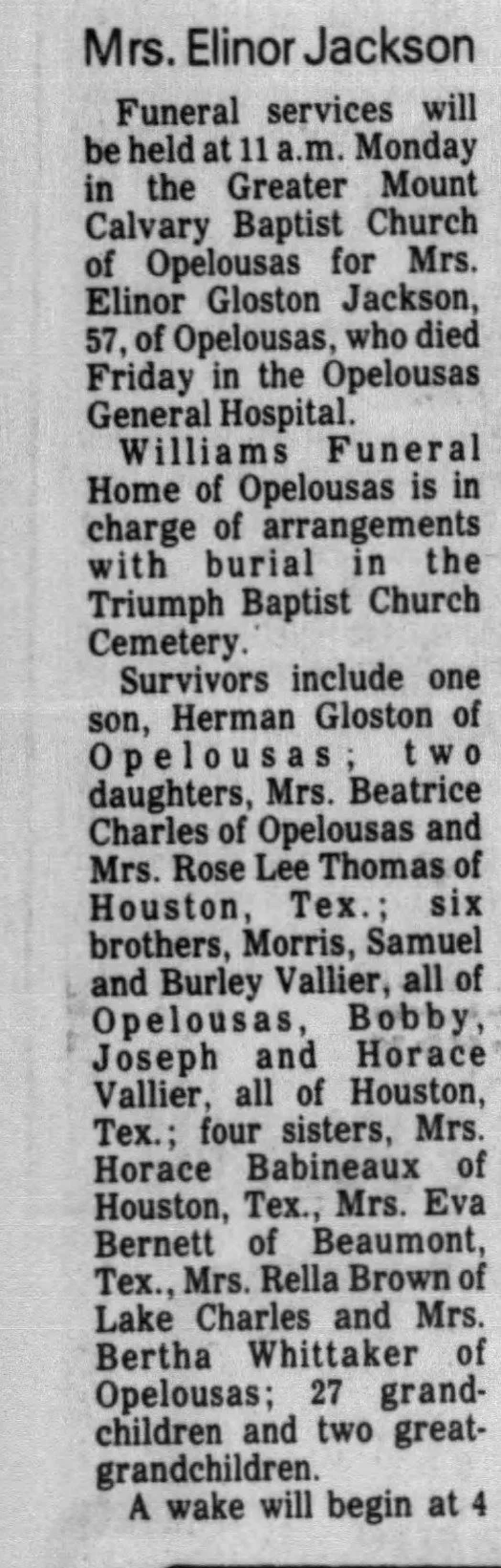
Source: 1980 Feb 17 Daily World Page 6
Sherry THOMAS Recalls Her Childhood Visit to The Island
On May 24, 2024, Sherry shared a personal recollection with me through a text message describing an experience she had as a child when her mother and other relatives took her to The Island. Her account provides a firsthand description of the community as she remembered it, including the landscape, the road leading to the cemetery, and the family relationships that continued to connect later generations to the area.
Personal Testimony of Sherry THOMAS, May 24, 2024
“I remember hearing about a place that my mom referred to as "The Island". Thought being a kid she was talking about somewhere in the Caribbean. But found out it was not. It was in Louisiana. So I had to be around 9 or 10 years old and I remember going on a ride with my mother, my aunt (mom's sister), my uncle (aunt's husband) and a cousin. They said they were going back there to the island. I'm like ooh I get to see what and where this place was finally. I remembered every street and every turn. Not realizing that I was going to need this information later in life. We got close to the location and I remember seeing so much greenery it was nice. I remembered seeing a little white church on the main road. We turned off that road onto a dirt road and there was nothing there but trees and shrubs. Very green though. I don't know why that stood out to me. We got to the end of the dirt road and it was a cemetery. Filled with graves. Can you imagine my confusion like where's the island? I didn't see any water lol I later found out that's the place is where my family is buried. My grandma, my brother and now my mother And so many other family members. I'm in tears writing this because I remember when my mother was dying she told me she wanted to go home and to put her by the trees. And I'm so thankful for the people she took me around and being given information and the memory to retain the information. That was so helpful in knowing about a place so many people don't talk about or even know exists. I hope more light is shed on this place and the beauty surrounding it. It seemed like it was a beautiful and meaningful place the way my mom and older ancestors spoke about it! Let's find out the beauty of Gradenigo Island.”
Source: Personal text message from Sherry THOMAS to Alex D. LEE, May 24, 2024.
Sherry's recollection is particularly meaningful because it demonstrates how younger generations were introduced to Gradenigo Island through family visits, even when they did not fully understand the history of the community. The details she remembered from childhood eventually became important when she needed to locate the burial ground where her mother wanted to be laid to rest.
For me, her account also demonstrates the importance of family members taking younger generations to ancestral communities, even when those children may not immediately appreciate what they are seeing. What had once been a childhood experience later became part of Sherry's effort to honor her mother's wishes, preserving a connection that might otherwise have been lost.
My Discovery at Mount Triumph Baptist Church Cemetery
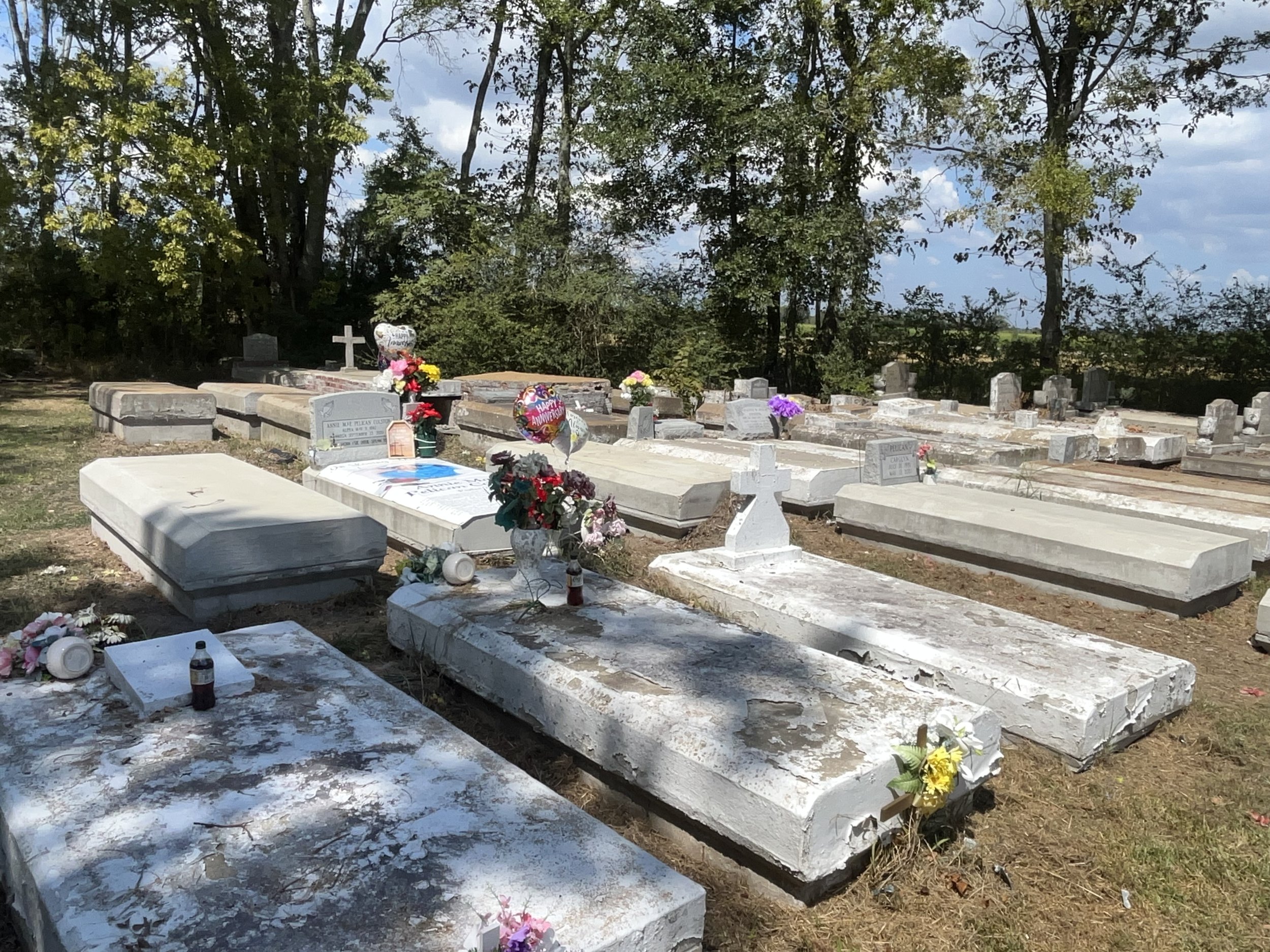
Mount Triumph Baptist Church Cemetery
Gradenigo Island, Louisiana, 2023
On the day of Rosa's funeral, I began examining the grave markers at Mount Triumph Baptist Church Cemetery and immediately recognized several surnames associated with families I had already researched. Having spent years documenting genealogies throughout southwest Louisiana, I was familiar with many of the families represented in the cemetery, particularly those whose ancestors appeared in plantation records and other courthouse documents.
As I looked around the cemetery, I became increasingly interested in determining how many of the individuals buried there were related to Rosa and whether their families had deeper historical connections to one another. I began considering how the names on the grave markers might connect to census records, land transactions, succession documents, Catholic Church registers, and plantation inventories dating back to the period of slavery.
It was during that visit that I decided to undertake an extensive investigation into the cemetery and the families associated with Gradenigo Island. Almost immediately, I began identifying relationships between individuals buried there and families whose histories I had previously documented. What made these discoveries particularly significant was that many of those individuals belonged to families whose ancestors had once been enslaved by Governor Jacques DUPRE.
Through my previous research into the DUPRE plantation holdings, I had already encountered several of these families, whose descendants remained in the surrounding Prairie Ronde and Bayou Boeuf communities following emancipation. The cemetery therefore offered an opportunity to examine what became of those families over successive generations and how they established new lives within the same geographical region where their ancestors had been enslaved.
Rather than examining these individuals solely through records created by enslavers, I could now begin identifying them through their marriages, children, property ownership, community institutions, and final resting places. This realization became one of the most important factors in my decision to expand the research beyond my own family's history.
Rosa's Final Wish and the Generations Who Continue to Return Home
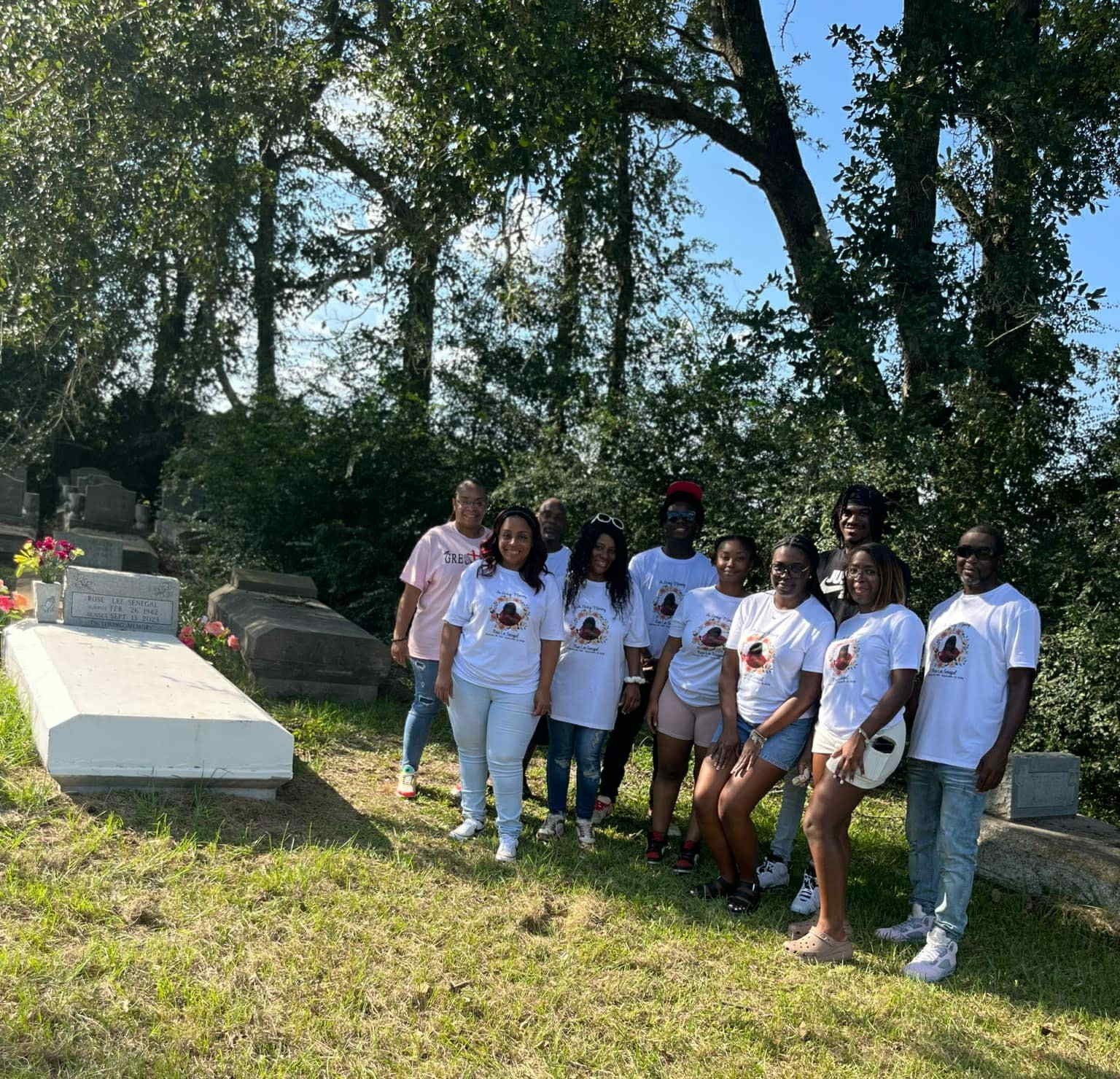
One of the most significant aspects of Rosa GLOSTON SENEGAL's decision to be buried on Gradenigo Island is the continuing relationship it has created between her descendants and their ancestral community. Rosa had expressed her desire to return home and be placed among her family members, particularly near the trees that she associated with the place where generations of her relatives were buried. Although her request concerned her final resting place, its importance extends beyond the burial itself because it has provided her descendants with a continuing reason to return to Gradenigo Island.
Every year, Sherry and her family visit The Island, maintaining a tradition of returning to the cemetery where Rosa, her mother Eleanor, and other relatives are buried. I find this particularly meaningful because the very place Rosa selected as her final resting place has become a location that continues to bring her descendants back to the community. What began as a mother's desire to be buried among her ancestors has contributed to the preservation of a family tradition that connects the generations who came before her with those who will follow.
There is also something especially important about the relationship between Sherry's childhood recollection and the annual visits her family now makes. As a young girl, Sherry accompanied her mother and other relatives to The Island without fully understanding the importance of the cemetery or why her family continued returning there. Today, by continuing to visit Gradenigo Island with her own family, she is participating in the same tradition that her mother and older relatives introduced to her many years ago.
For me, this is an important example of how family history can remain connected to a physical place long after the original residents have passed away or their descendants have moved elsewhere. Rosa's final wish helped ensure that her children, grandchildren, and future descendants would continue to have a reason to visit the community, remember the people buried there, and learn about the generations of relatives whose lives were connected to Gradenigo Island.
As I reflect on this experience, I also recognize that Rosa's decision contributed to the development of my own research interests. Had she not expressed her desire to be buried on The Island, Sherry might not have reached out to me for assistance, Corey and Ivy JONES might not have undertaken their search for the cemetery, and I might not have attended a funeral that prompted me to examine the historical relationships among the families buried at Mount Triumph Baptist Church.
Preserving the History of Gradenigo Island
What began as an interest in the stories shared by my relatives has developed into a larger investigation into the history of Gradenigo Island, the families who lived there, and the circumstances that contributed to the community's development. Through my research, I have been able to connect the community's name to a prominent colonial family of Venetian ancestry, identify courthouse and Catholic Church records documenting the lives of free people of color and enslaved relatives of the GRADENIGO family, and examine the descendants of formerly enslaved families whose histories became connected to Prairie Ronde.
The DUPRE family connection has become particularly important because it allows me to examine the history of the community through both the descendants of the enslavers and the descendants of the enslaved. The records associated with Governor Jacques DUPRE and his family provide evidence of extensive landownership, plantation operations, inheritance, and the lives of enslaved individuals. When these documents are examined alongside post-emancipation property transactions, census records, and family histories, they can help explain how some formerly enslaved families and their descendants became property owners within the same region.
My interest in the case involving Augustin Belair FONTENOT also demonstrates the importance of looking beyond familiar historical accounts of prominent individuals. Jacques DUPRE's involvement in carrying out his uncle's wishes concerning his liberated children of color and their substantial property holdings near Mamou provides another example of the complicated relationships between ancestry, race, inheritance, and property ownership in Louisiana. These records help explain why the histories of families in southwest Louisiana cannot always be understood through simple racial or social classifications.
As I continue this investigation, I want to identify the families who lived on Gradenigo Island, reconstruct their ancestral relationships, examine the land transactions associated with the community, and document the history of Mount Triumph Baptist Church and its cemetery. I am also interested in learning more about the schools, churches, businesses, family settlements, and other institutions that contributed to life in the community, particularly during the period following emancipation and into the twentieth century.
The history of Gradenigo Island cannot be told exclusively through the family whose name became associated with the land. It must also include the experiences of enslaved individuals, free people of color, formerly enslaved families, and generations of descendants who established their own relationships with the community. Their histories provide a more complete understanding of how the area developed and how its identity was preserved through the people who continued to call it home.
When I think about everything that led me to this investigation, I often return to the conversations I had with my older relatives, who spoke so naturally about a place they called The Island. At the time, I had no idea those conversations would eventually connect me to a Venetian family, colonial Catholic records, nineteenth-century emancipation documents, the wealth and political career of Governor Jacques DUPRE, and a cemetery containing generations of families whose ancestry I had already researched.
Perhaps one of the most meaningful aspects of this entire experience is that Rosa GLOSTON SENEGAL's final wish to return home has helped maintain a continuing connection between her descendants and Gradenigo Island. Every year that Sherry and her family return to visit their loved ones, they are preserving a tradition introduced to them by earlier generations while creating opportunities for younger relatives to understand their family's relationship to the community.
For me, this is what makes documenting the history of Gradenigo Island so important. The community is more than a name found in old courthouse documents or remembered through the stories of older relatives. It is a place where generations of families lived, where their ancestors were buried, and where their descendants continue to return. By bringing together those memories with historical documentation, I hope to reconstruct a history that recognizes not only the families who first acquired the land, but also the generations whose lives, contributions, and family relationships helped establish the community remembered today as The Island.
Historical Sources and Research Notes
Opelousas Catholic Church, Volume 1-A, page 90. Baptism of Brigitte GRADENIGO, January 17, 1789, with marginal annotation attributed to Father Michel Bernard BARRIERE. The original French annotation and accompanying English translation are reproduced in the chapter.
St. Landry Parish Courthouse, Book H-1, pages 303–304. Act of emancipation involving MARIE, JEAN BAPTISTE, MARTIN, and HONORE, December 21, 1833.
St. Landry Parish Courthouse, Marriage No. 1656. Marriage of HONORE GRADENIGO and Marie CHEVIS, October 31, 1857.
Sherry THOMAS, personal communication to Alex D. LEE, May 24, 2024. Written recollection of visiting Gradenigo Island as a child and her mother's desire to be buried among relatives at Mount Triumph Baptist Church Cemetery.
Biographical references concerning Jacques DUPRE. Louisiana Secretary of State, Louisiana Governors, 1812–1861; 64 Parishes, biography of Jacques DUPRE; and the Historic American Buildings Survey documentation of the Governor Jacques DUPRE House.
Additional genealogical records requiring full archival citations. Succession of Augustin Belair FONTENOT; DUPRE plantation inventories; post-emancipation land purchases involving DUPRE descendants and formerly enslaved families; and the 1889 sale of approximately 110 arpents involving Joseph, Joachim, Charles HALL, and Armand WARTELL.
Research distinction: The documented family histories, original quotations, and oral testimony are presented separately from broader interpretations of the community's development. The precise boundaries of Gradenigo Island, individual land transfers, extent of the DUPRE enslaved population, and genealogical relationships of all persons buried at Mount Triumph Baptist Church Cemetery remain subjects for continued primary-source verification.
