

Filling Research Gaps
Professional Genealogical Research for Institutions
with Alex Genealogy
Many organizations steward archives, collections, and historical materials that remain underutilized due to limited capacity, incomplete indexing, or the absence of specialized genealogical expertise. As a result, countless individuals, families, and communities remain undocumented or only partially represented within institutional records.
Alex Genealogy partners with institutions to help close these gaps through professional genealogical research, archival analysis, and historically grounded documentation.
Addressing Institutional Research Challenges
Libraries, museums, universities, cultural organizations, and public agencies often hold valuable records that lack the contextual research needed to make them accessible, accurate, and meaningful to the public.
Common challenges include:
Fragmented or unindexed archival materials
Incomplete documentation of historically marginalized communities
Conflicting or inconsistent records within existing collections
Limited staff capacity for in-depth genealogical research
Professional genealogical support allows institutions to activate these materials with clarity and credibility.

Professional Genealogical Research Services for Institutions
Alex Genealogy supports institutional research initiatives by:
Conducting archival and genealogical research to surface overlooked individuals, families, and lineages
Verifying historical records and resolving inconsistencies within existing collections
Supporting lineage documentation for community-based history and public history projects
Providing genealogical research services for exhibitions, publications, and institutional initiatives
All research is conducted using accepted genealogical standards and ethical research practices.
Expanding the Historical Narrative
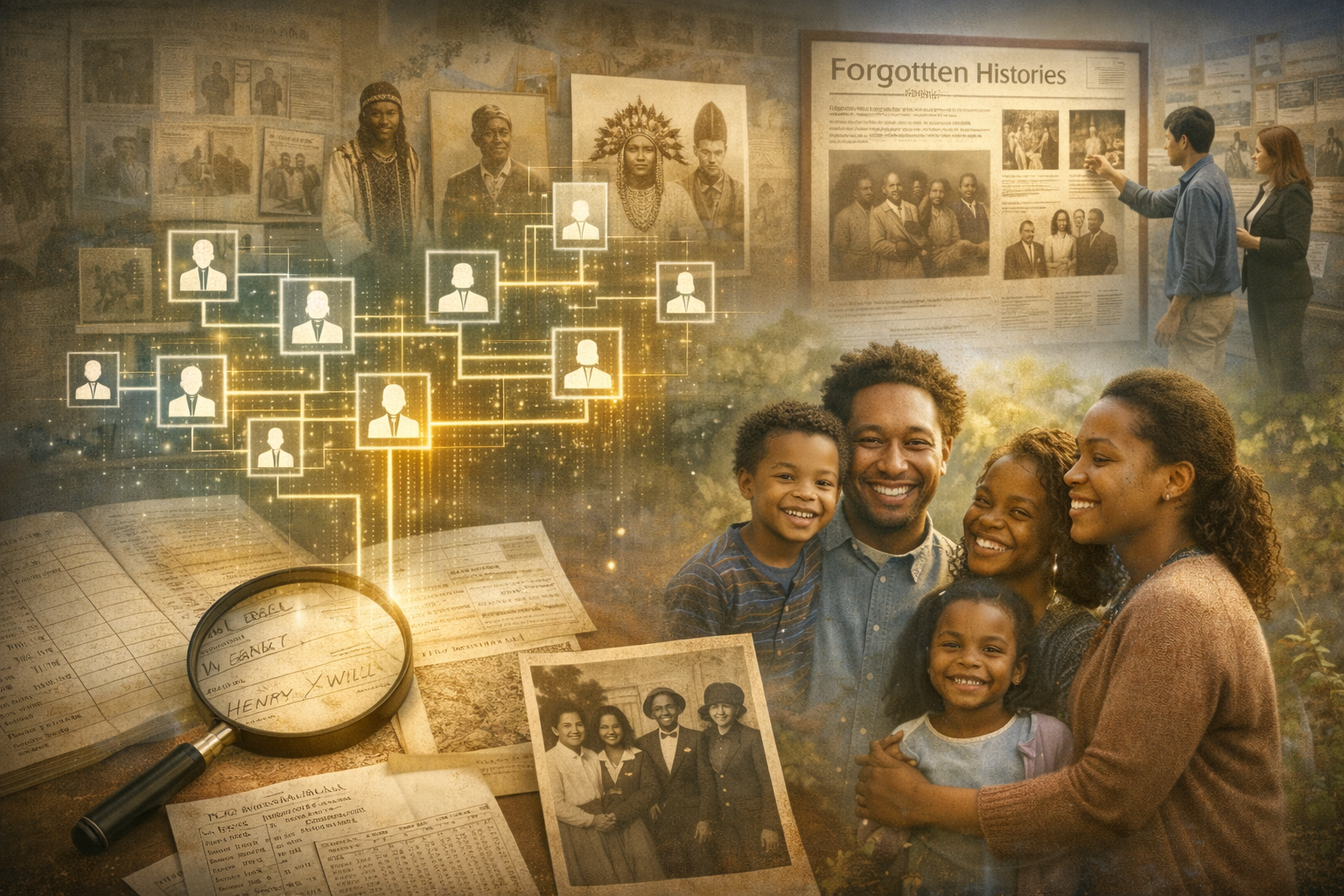
Institutional records often reflect only what was formally documented, leaving significant gaps—particularly within Black, Indigenous, and historically underrepresented communities.
This work strengthens institutional collections by:
Expanding visibility beyond previously documented narratives
Restoring context to names, families, and communities
Supporting more inclusive and accurate historical interpretation
Enhancing public engagement with archival materials
Genealogical research transforms static records into living history.
Who This Service Supports
This service is designed for:
Libraries and archives
Museums and cultural institutions
Universities and research organizations
Genealogical societies and historical associations
Nonprofits and public agencies
Community history and preservation initiatives
Collaborations are tailored to institutional missions, research goals, and audience needs.
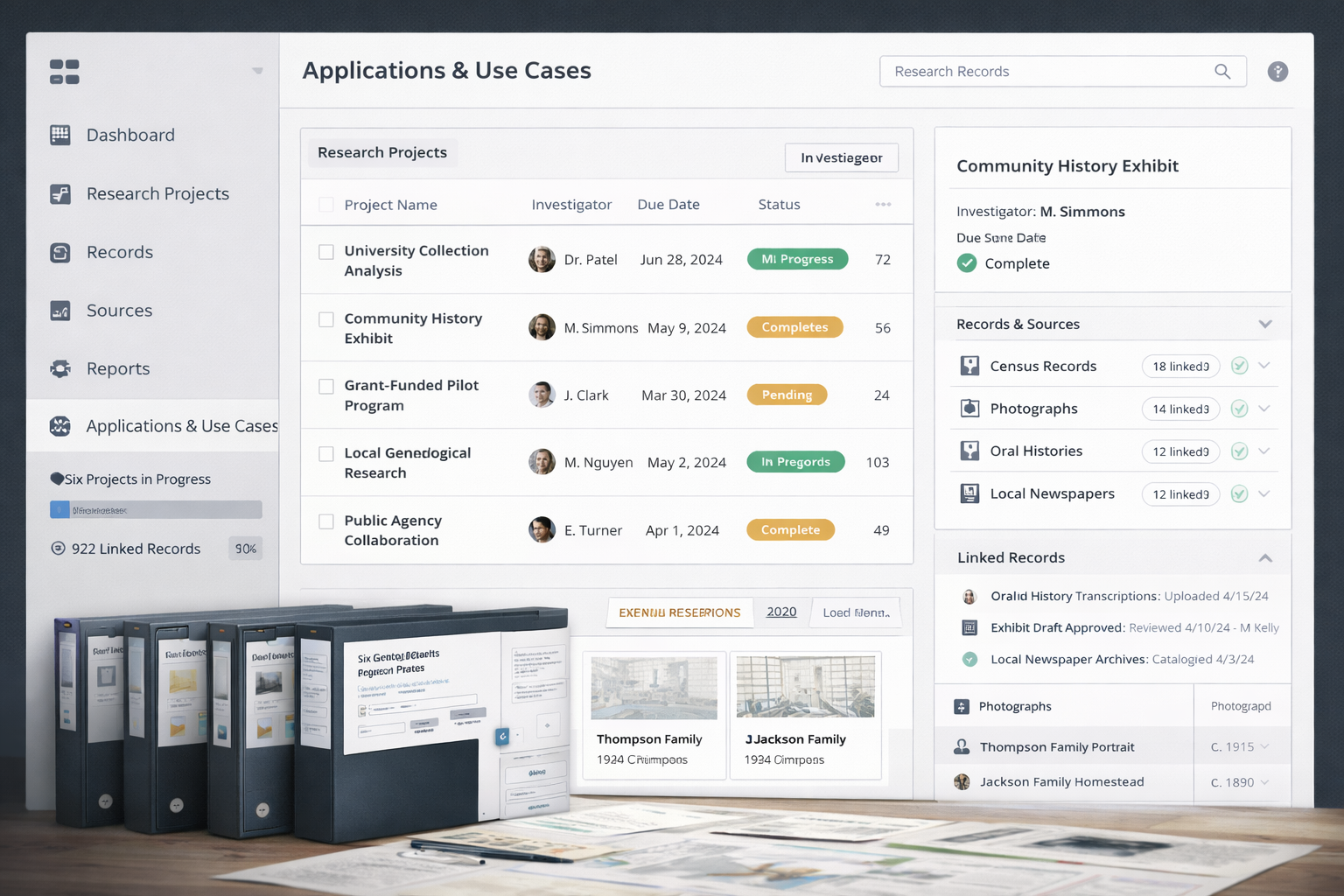

Engagement Process
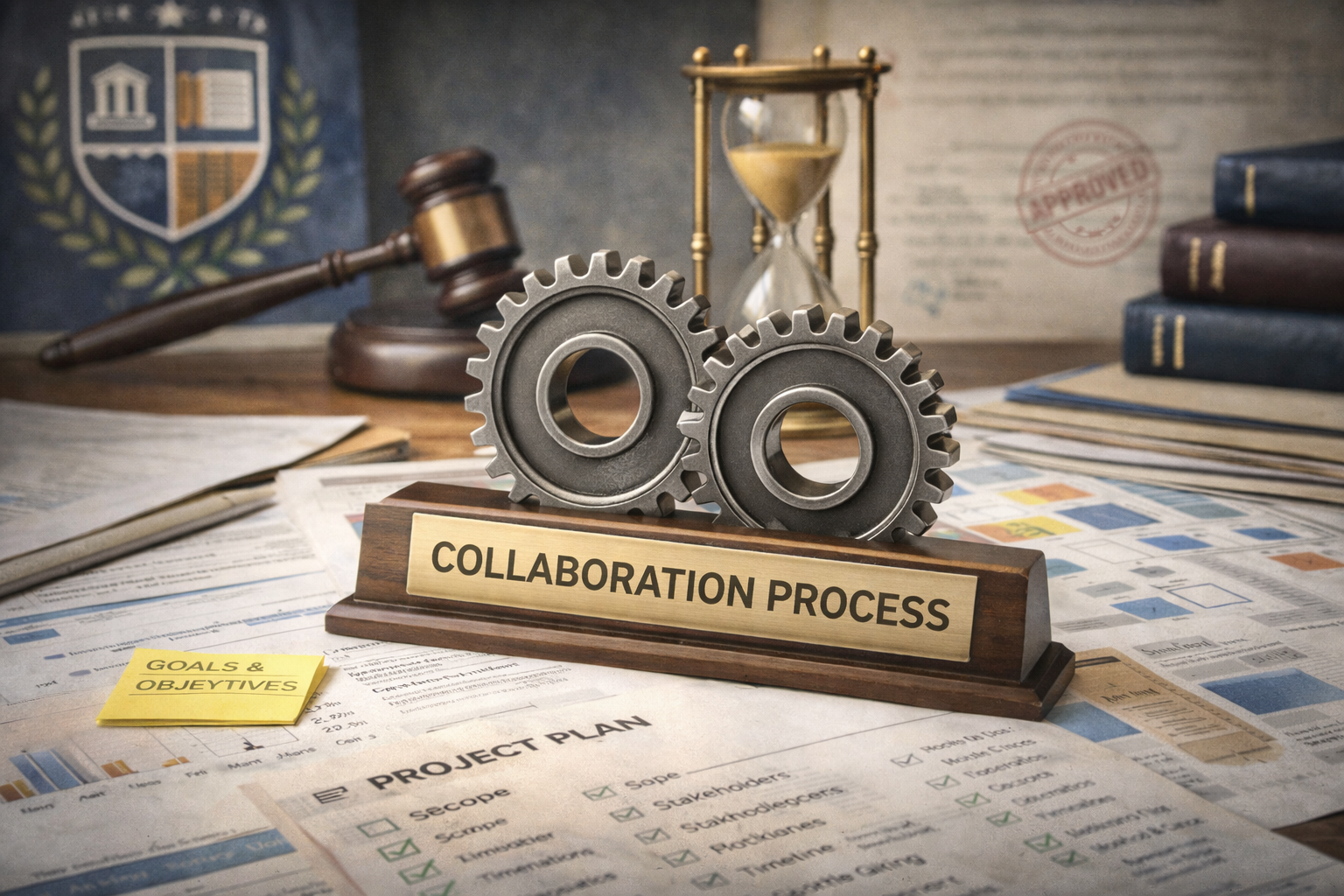
All institutional research projects begin with a Collaboration Meeting to assess scope, objectives, timelines, and alignment.
Research parameters, deliverables, and logistics are confirmed prior to engagement to ensure clarity and accountability.
Applications & Use Cases
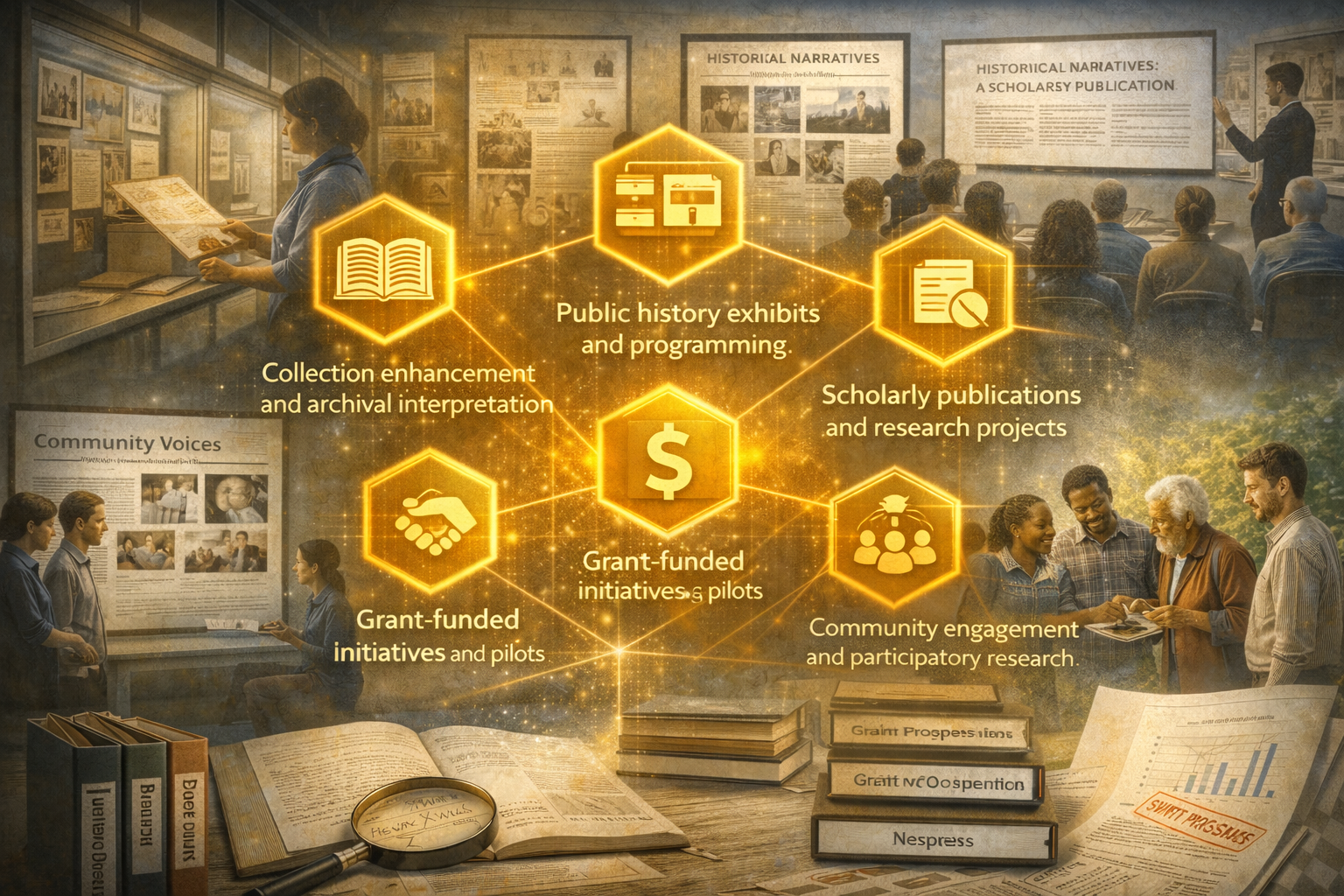
Institutional genealogical research may support:
Collection enhancement and archival interpretation
Public history exhibits and programming
Scholarly publications and research projects
Grant-funded initiatives and pilots
Community engagement and participatory research
Each engagement is structured to deliver usable, documented outcomes.
Related Organizational Services
Educational Programming & Workshops
Presentations & Panels
Program & Initiative Development
Consulting & Advisory Services