

Filling Preservation Gaps
Historical Memory & Legacy Documentation
with Alex Genealogy
Many institutions steward historical materials that risk remaining static, fragmented, or inaccessible without intentional preservation strategies. Records alone do not preserve history—context, lineage, and interpretation are required to ensure long-term meaning and use.
Alex Genealogy collaborates with organizations to transform genealogical materials into preserved, accessible, and living historical memory.
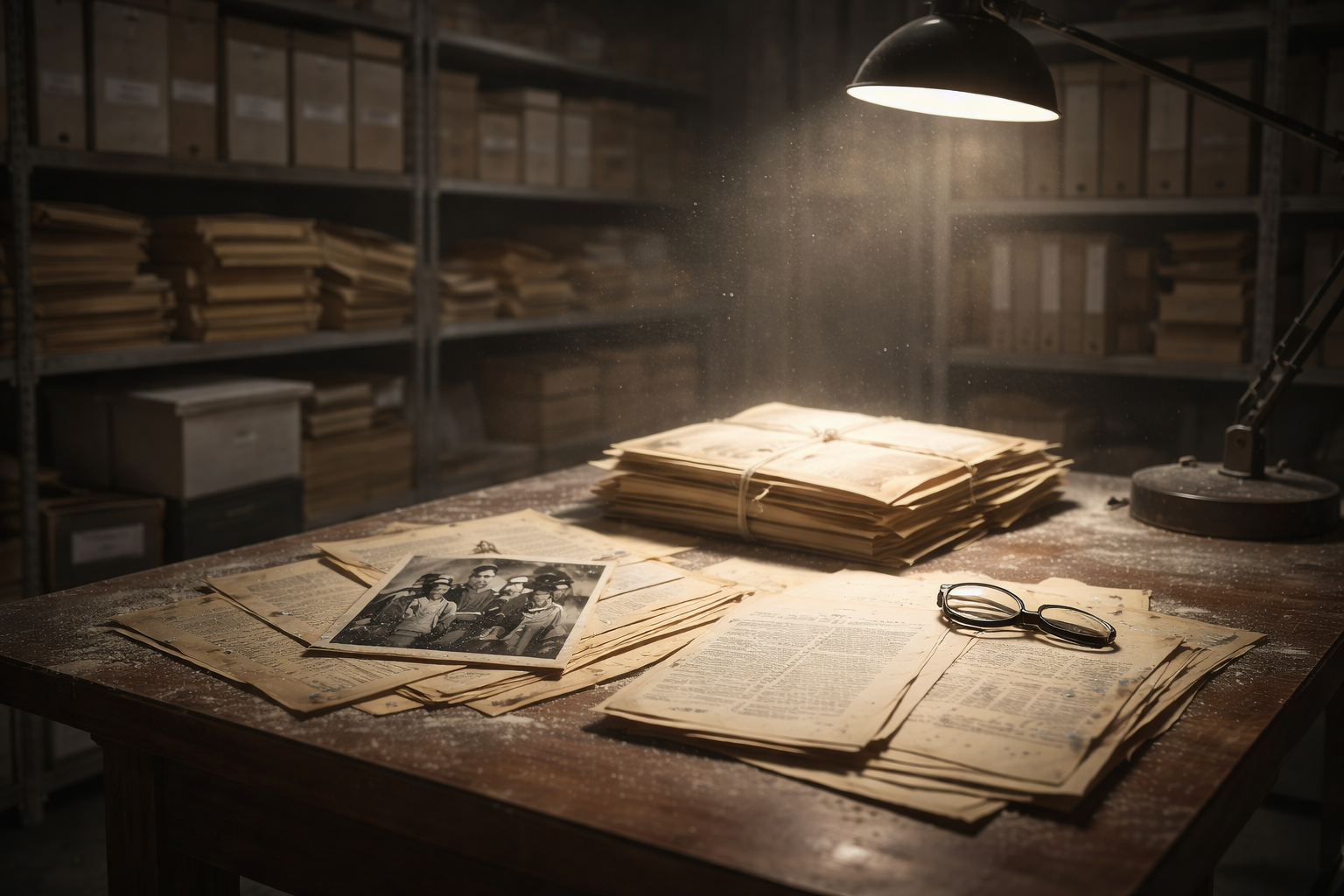
Genealogical Preservation & Legacy Documentation Services
Alex Genealogy collaborates with organizations to:
Assist in documenting family histories connected to institutional collections
Support community-based preservation initiatives and participatory history projects
Develop genealogical content for digital archives and public history platforms
Contribute to long-term strategies for safeguarding cultural and historical memory
All preservation work is conducted with ethical research practices and respect for community narratives.
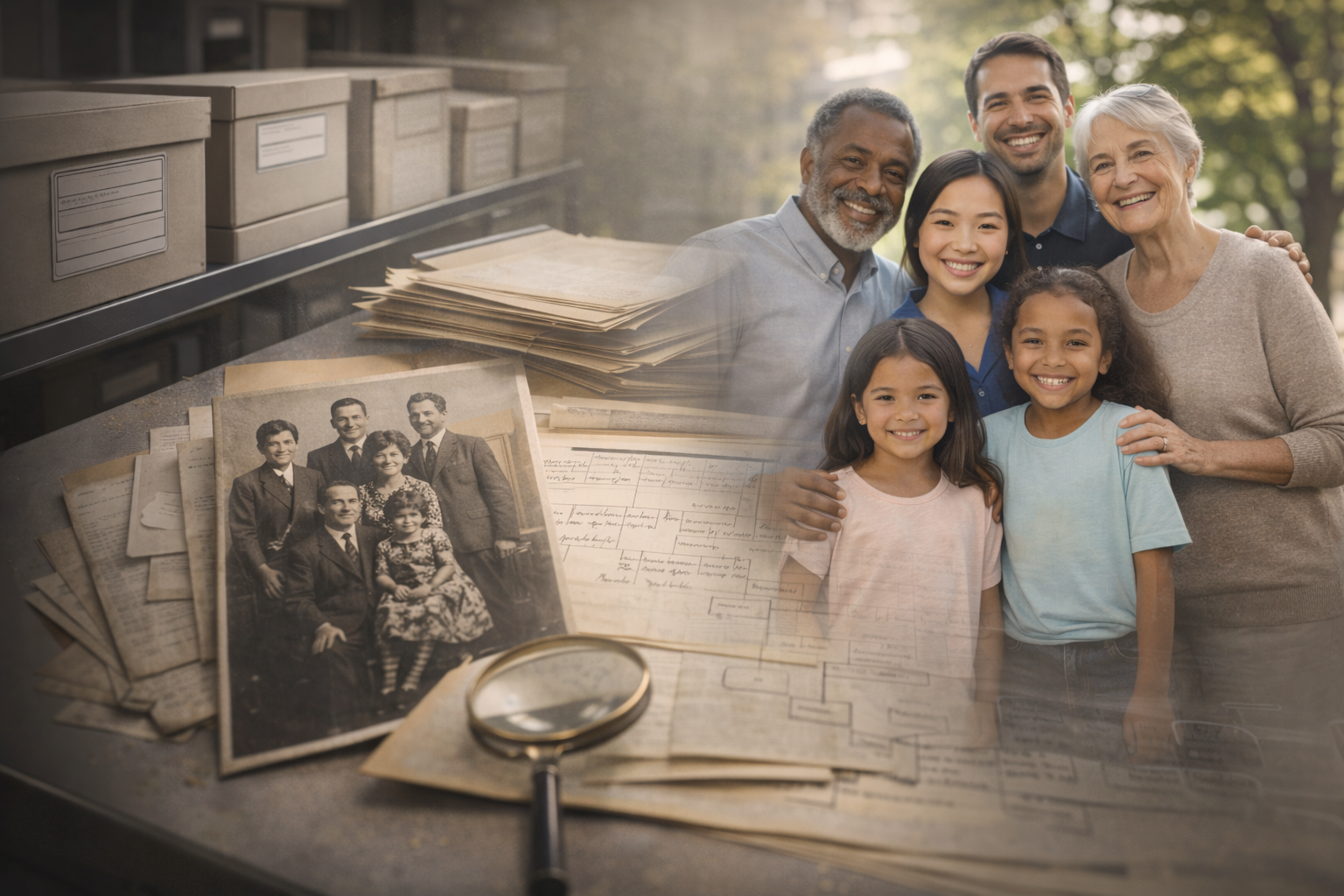
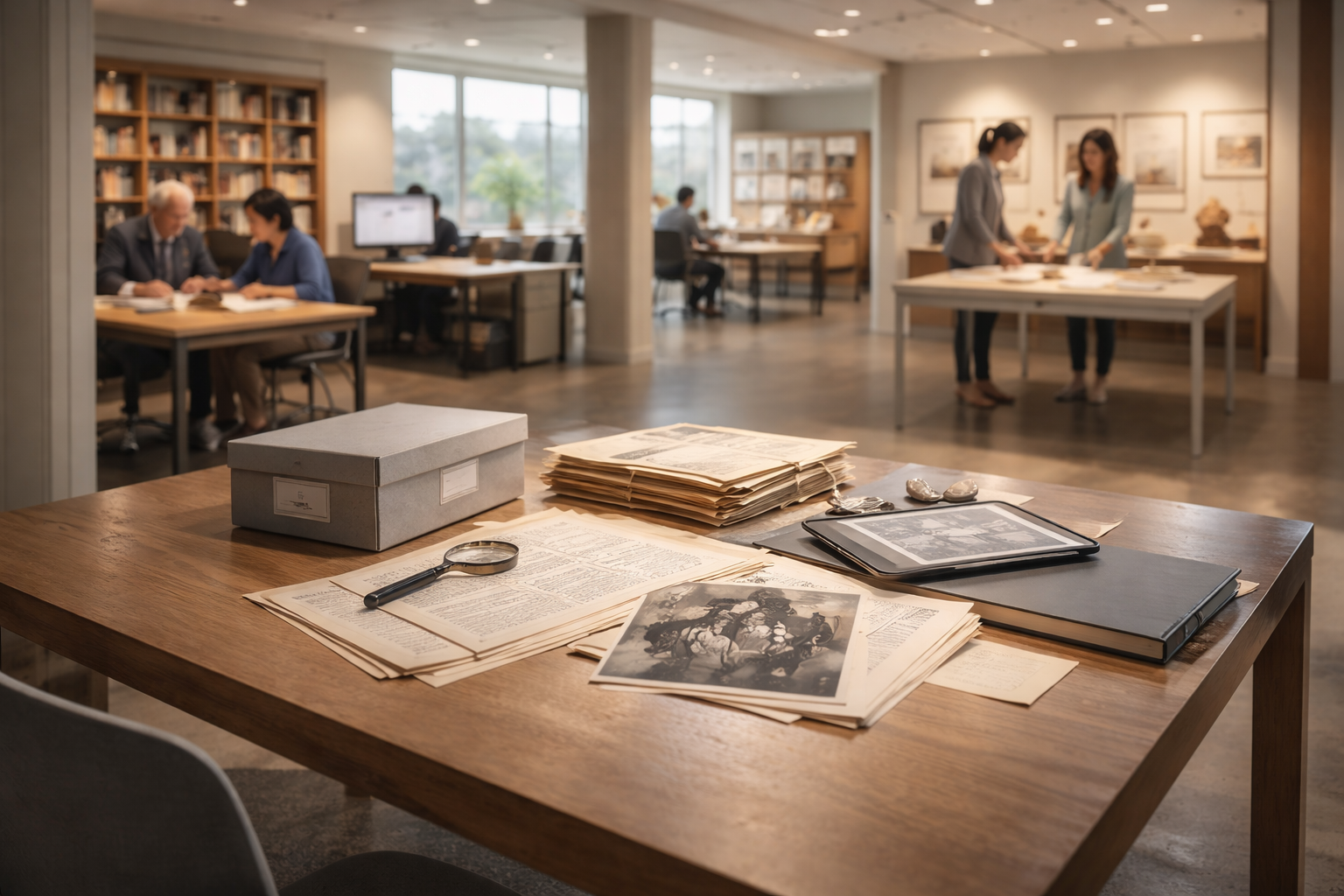
Addressing Gaps in Historical Preservation
Libraries, archives, museums, and cultural institutions often hold collections that lack the genealogical framing needed to connect materials to families, communities, and broader historical narratives.
Common preservation challenges include:
Disconnected records without lineage context
Family histories separated from institutional collections
Limited strategies for long-term digital access
Community knowledge that remains undocumented or at risk of loss
Genealogical preservation ensures that historical materials remain relevant, interpretable, and usable over time.
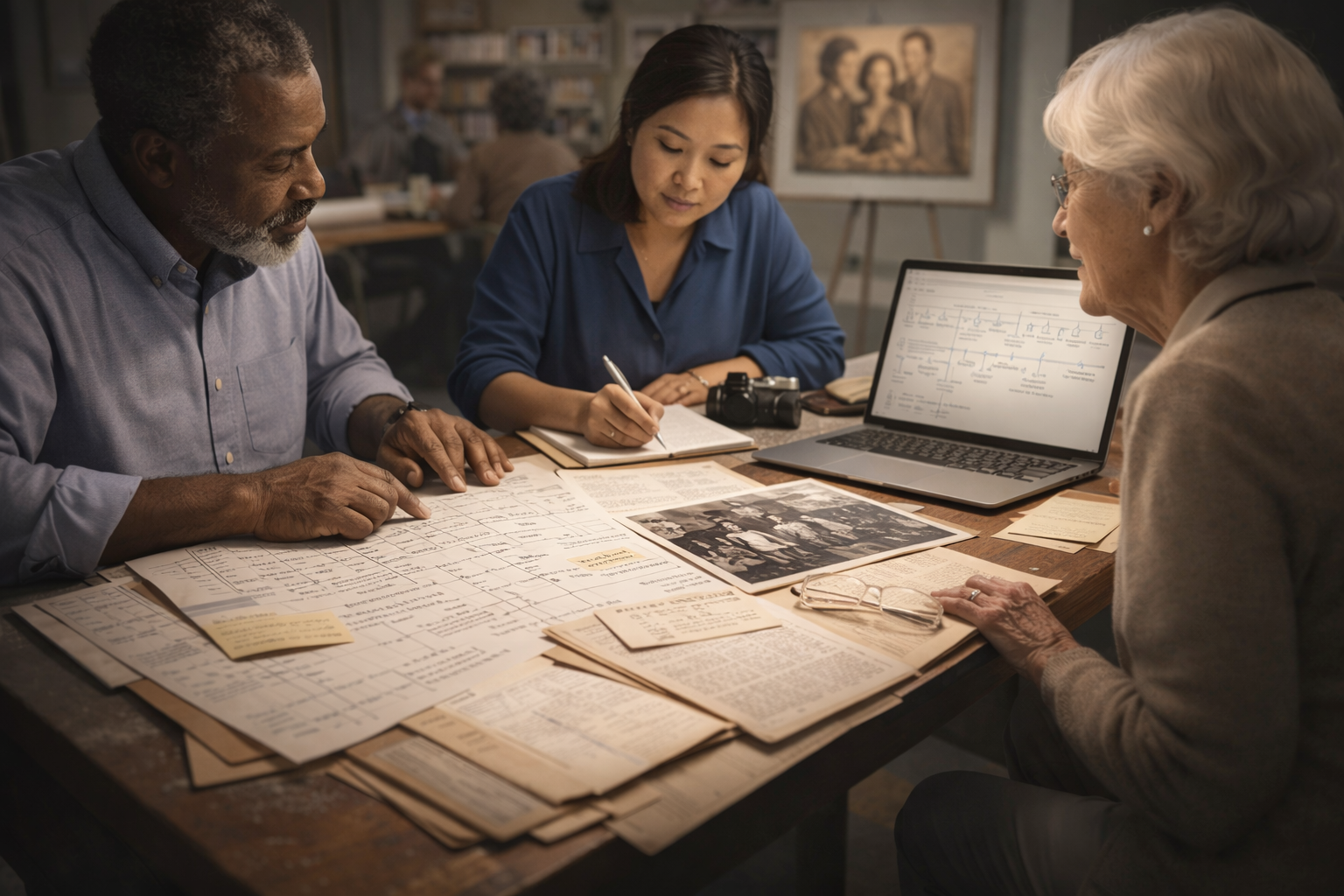
From Records to Living Memory
Preservation is most effective when genealogy is used to bridge archival materials with lived experience. This work helps institutions:
Restore family and community context to historical records
Preserve lineage alongside documentation
Expand accessibility to genealogical knowledge
Strengthen connections between collections and the public
Genealogical preservation ensures that history is not frozen in time, but carried forward with meaning.
Who This Service Supports
This service is designed for:
Libraries and archival institutions
Museums and cultural centers
Universities and research organizations
Community history and preservation initiatives
Nonprofits and public agencies
Digital archive and public history projects
Collaborations are tailored to institutional missions, audiences, and long-term preservation goals.
Applications & Outcomes
Genealogical preservation services may support:
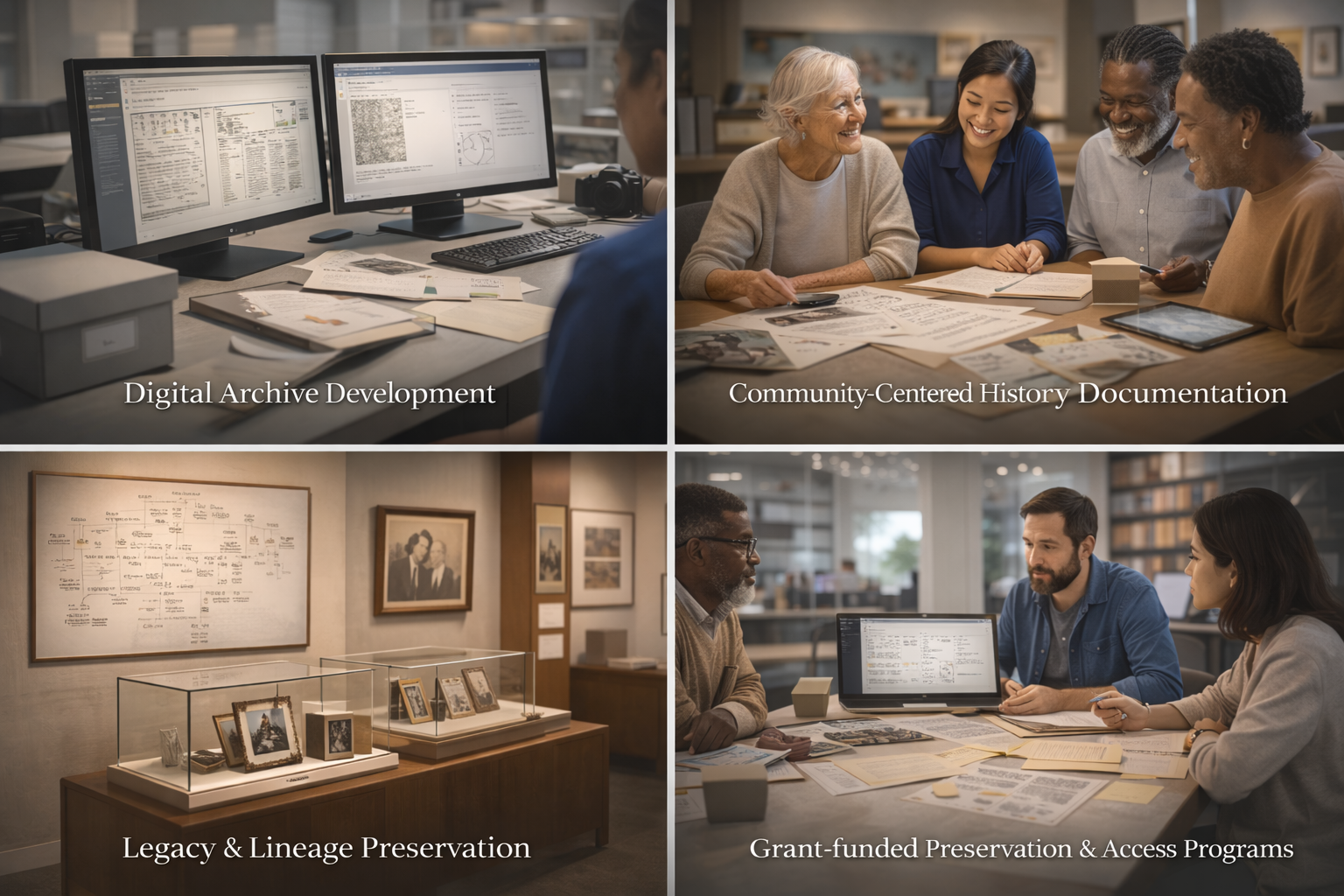
Digital archive development and enhancement
Community-centered history documentation
Legacy and lineage preservation initiatives
Institutional memory projects
Grant-funded preservation and access programs
This work strengthens institutional capacity while honoring community history.
Engagement Process
All preservation collaborations begin with a Collaboration Meeting to assess goals, collections, scope, and alignment.
Preservation strategies, timelines, and deliverables are defined prior to engagement to ensure clarity and sustainability.
Related Organizational Services
Filling Research Gaps
Filling Education Gaps
Program & Initiative Development
Consulting & Advisory Services